
How Do Porta Potties Work?
The basic design has not changed much. Waste drops into the tank, the chemical mix knocks down odor and starts breaking down solids, and the tank sits sealed until a service tech pumps it. There is no flush, no float, no moving water. That is why a standard porta potty rental is cheap to run compared to plumbed options. ANSI/PSAI Z4.3 sets the baseline service interval at once a week for up to 10 users over a 40 hour week, which is why a construction crew of 15 in Palm Desert usually sees a tech every few days, not once a month. OSHA 1926.51(c) sets the ratio that drives how many units a jobsite needs: one toilet for 20 workers or fewer, climbing from there. If you are trying to size a crew correctly, the how many porta potties do I need guide walks through the math, and the OSHA portable toilet requirements page breaks the ratio down further. A construction worker running to a porta potty on break does not want to wait, so contractors near Rancho Mirage, 5.8 miles northwest of Palm Desert, tend to round up on unit count rather than cut it close.
How Does a Portable Sink Work?
A portable sink rental carries its own fresh water tank, a foot pump or hand pump to move water to the faucet, and a gray water tank underneath to catch the runoff. No hose hookup needed. Soap sits in a built-in dispenser. Under 29 CFR 1910.141(d)(2), handwashing stations need soap and towels or a hand dryer; hand sanitizer alone does not satisfy that standard. That is why most jobsites pair a handwashing station rental with their toilets instead of relying on a hand sanitizer station rental alone. If your crew is doing anything with paints, coatings, herbicides or insecticides, OSHA 1926.51(f)(1) requires washing facilities on top of the general sanitation rule, which is a different trigger than plain job sanitation. Farms around Coachella, 16.6 miles east of Palm Desert, fall under a separate rule, OSHA 1928.110, which calls for one facility per 20 hand-labor employees within a quarter mile walk. See the handwashing requirements page for the full breakdown, or check farm and agricultural restrooms for field-specific setups.
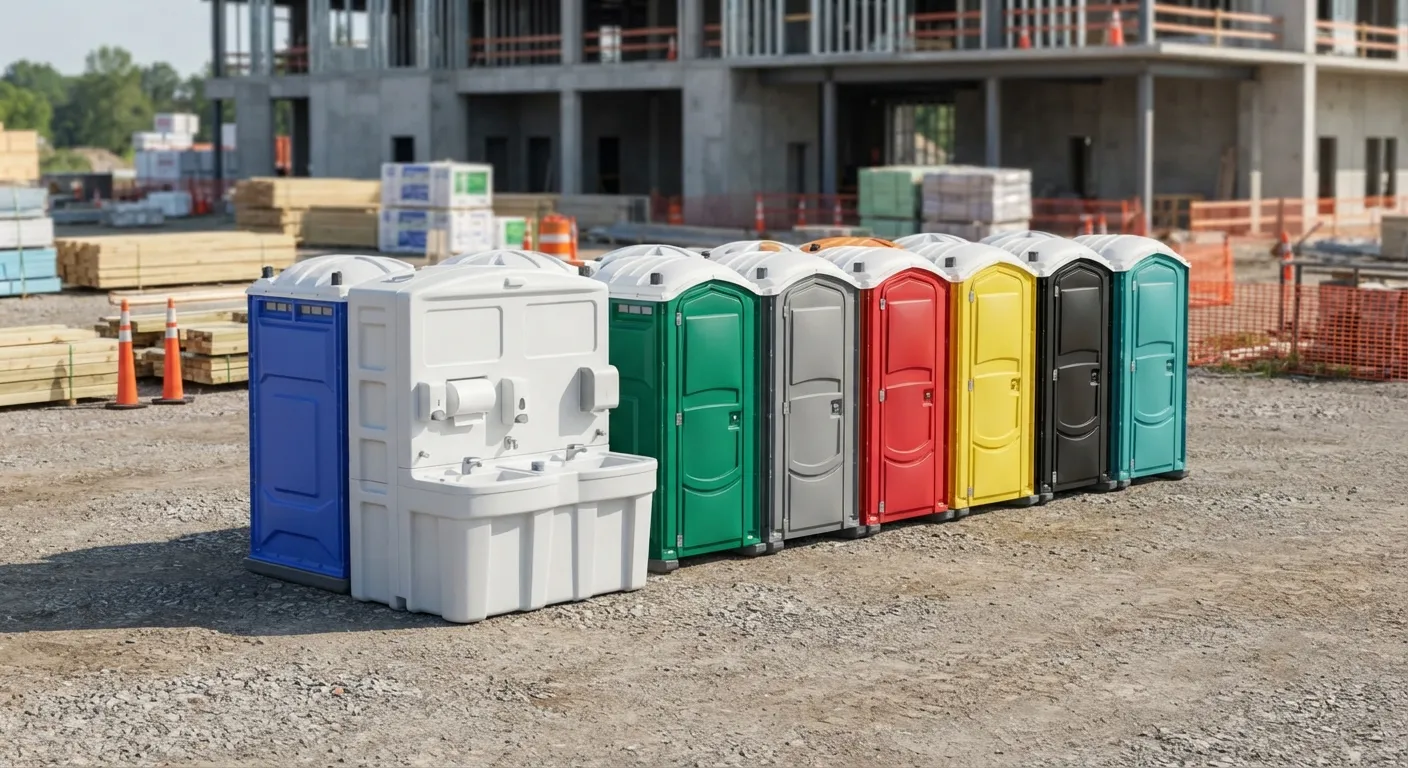
How Do Flushable Porta Potties Work?
A deluxe flushable porta potty adds a small onboard water tank and a foot-pedal or handle flush that pushes a rinse of water down before the tank seals again. It still is not plumbed to a sewer line, it just rinses instead of dropping waste dry. That extra comfort shows up in the price: a deluxe unit for a day runs from 85 to 1200 dollars depending on features, while a weekly deluxe rental lands between 150 and 290 dollars. An ADA accessible porta potty can be built with the same flush mechanism, and ADA Standards section 304.3.1 requires a 60 inch turning circle inside, with a 32 inch clear door opening under section 404.2.3. Weddings and events near La Quinta, 11.7 miles southeast of Palm Desert, often spec deluxe or ADA units for guest-facing areas while keeping standard units for staff and vendors. The wedding restroom rental and event restroom rental pages cover typical event layouts.
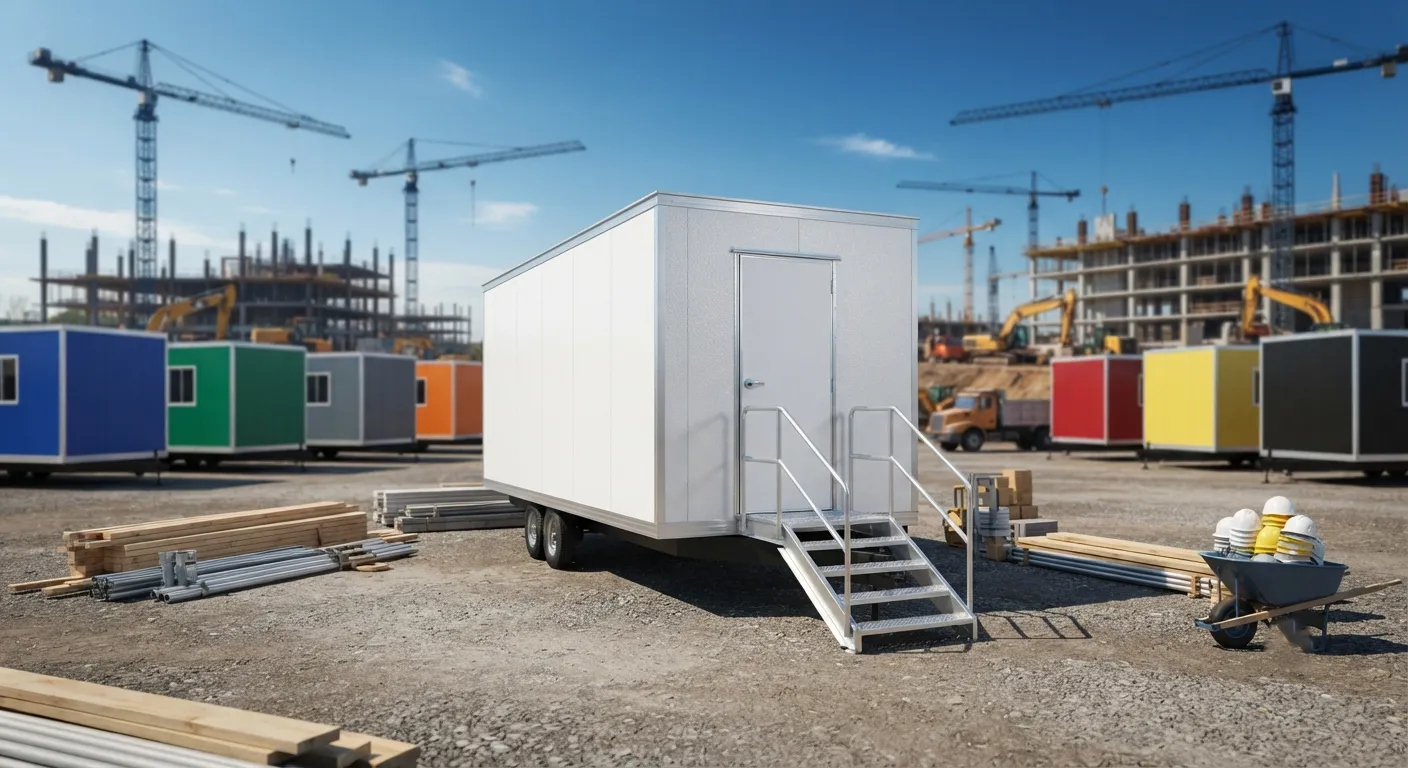
Do Camping Porta Potties Work the Same Way?
Camping units work the same way at a smaller scale: sealed tank, chemical treatment, no water line. The chemical is usually a blue deodorizing tablet or liquid, similar to what's used in a camping porta potty or in the septic tank cleaning chemicals a homeowner drops into a residential tank between pump-outs. That is a different system from a portable toilet, though. A residential septic tank typically gets pumped every 3 to 5 years depending on tank size and household count, while a rented portable toilet on a Palm Desert jobsite gets serviced on the weekly interval ANSI/PSAI Z4.3 sets as baseline. If a system backs up between visits, that is a different problem than a full porta potty tank, and the septic tank warning signs page covers what to watch for. For active leaks or overflow, emergency septic service and emergency porta potty rental both cover same-day response.
| unit | duration | low | typical | high |
|---|---|---|---|---|
| standard | day | 100 | 150 | 350 |
| standard | week | 130 | 200 | 500 |
| deluxe | day | 85 | 300 | 1200 |
| ada | week | 120 | 185 | 240 |
Full pricing detail lives on porta potty rental cost, and the day-rate breakdown is on porta potty rental per day.
Do porta potties smell?
They can, if service is skipped or the chemical runs low, but a properly serviced unit on the weekly ANSI/PSAI Z4.3 interval should not smell strong. Heat in Palm Desert speeds up odor buildup, so summer jobsites sometimes bump to twice-weekly service. See do porta potties smell for more.
How often are porta potties cleaned?
Most rentals follow the ANSI/PSAI Z4.3 baseline of once a week for up to 10 users over 40 hours. High-traffic events or large crews need more frequent visits. The how often are porta potties cleaned page covers scheduling by user count.
What chemicals go in a porta potty?
A non-toxic deodorizing and digesting chemical, usually blue or green, breaks down waste and masks odor between service visits. It is not the same product as septic tank treatment chemicals, which target a home's full septic system rather than a sealed rental tank.
Can I rent a porta potty for just one day?
Yes. Standard units rent by the day starting around 100 dollars, and event-specific day rates are listed on porta potty rental per day. Weekend rates also apply for Friday-to-Monday events, priced separately from daily and weekly rates.
Are portable toilets required on construction sites?
Yes, under OSHA 1926.51(c), which sets toilet ratios by crew size. A 20-person crew needs at least one unit, more as headcount rises. Full ratio detail is on OSHA portable toilet requirements, and construction site services covers full-site setups.
Next step
Get a delivery date
Tell us the address, the dates and the headcount. We size the order and confirm the route.